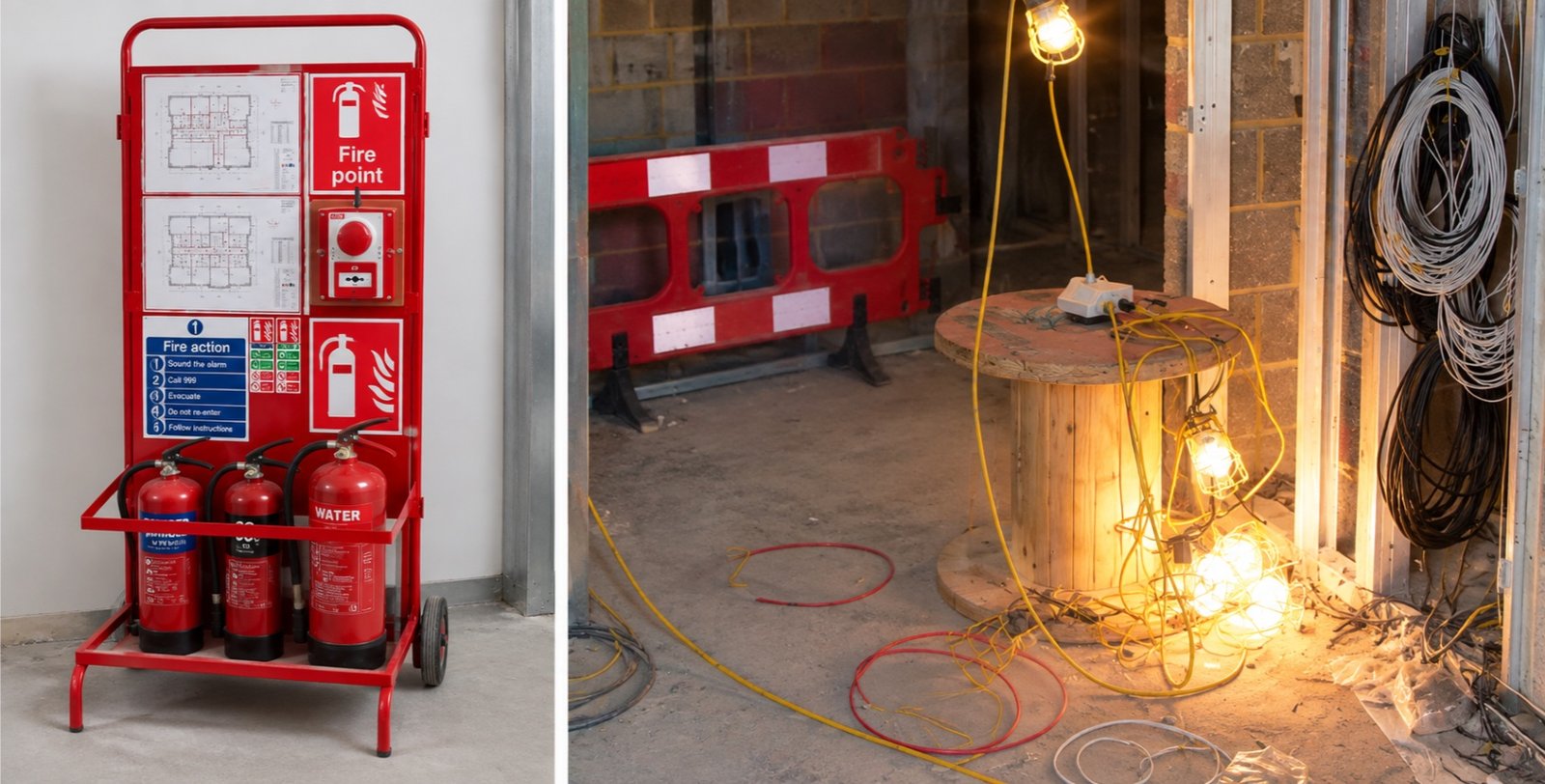
Construction Fire Risk Assessment
A Principal Contractor is required under fire safety legislation to undertake a fire risk assessment for the areas under their


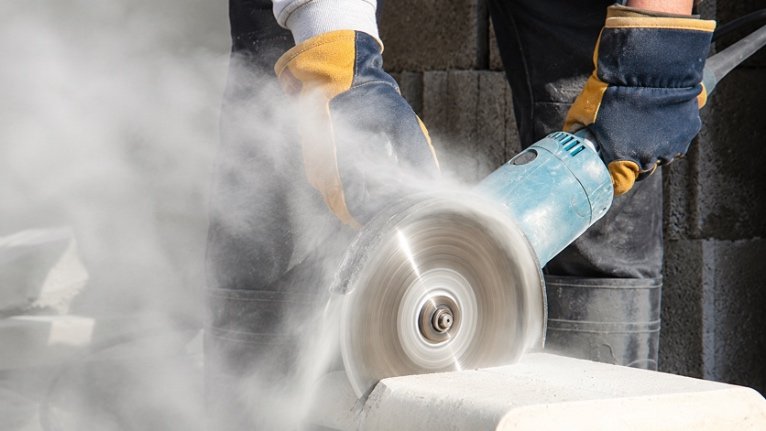
Respirable crystalline silica (RCS) is one of the most common occupational health hazards in construction.
Silica is a natural mineral found in materials such as concrete, brick, blockwork, mortar, stone, tiles and paving products. Left undisturbed, these materials are generally harmless. However, when they are cut, drilled, ground, chased, crushed or broken, they release dust into the air. Some of that dust is small enough to be breathed deep into the lungs, where it can cause irreversible damage.
Despite awareness campaigns and improvements in dust control technology, workers continue to be exposed to dangerous levels of silica every day. In many cases, the risk is underestimated because the health effects are not immediate. Instead, they may take many years, or even decades, to develop.
Not all dust is the same.
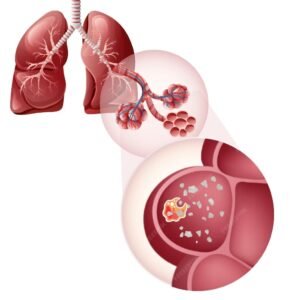
Larger dust particles are often trapped by the body’s natural defence mechanisms before reaching the lungs. Respirable crystalline silica is different. These particles are so small that they can bypass those defences and travel deep into the alveoli – the tiny air sacs where oxygen passes into the bloodstream.
Once deposited, the body’s immune system attempts to remove the particles. However, crystalline silica is extremely durable and cannot be broken down effectively. Repeated exposure can lead to inflammation and scarring of the lungs.
Over time, this damage is associated with serious health conditions including:
These conditions are irreversible and can have a significant impact on quality of life.
One of the biggest challenges with silica dust is that the consequences are rarely immediate.
Unlike a physical injury, workers do not usually feel the effects of exposure at the time. The damage develops gradually over many years, often after repeated uncontrolled exposure.
This can lead to shortcuts being taken. A quick cut without extraction. A brief grinding task without a mask. A few minutes spent sweeping up dust at the end of the day.
However, these exposures accumulate.
What feels like a one off task today may become another deposit of silica dust that remains trapped in the lungs for life.
The most effective approach is to follow the hierarchy of control.
Can the task be designed differently? Can materials be supplied pre-cut? Can an alternative product be used?
Removing the need to generate dust is always the preferred solution.
Where silica-containing materials must be worked, the priority should be to control dust at source.
Common methods include:
Modern tools often incorporate extraction ports or water suppression systems specifically for this purpose. These controls can significantly reduce the amount of airborne dust generated.
Respiratory protective equipment should never be the only control measure, but it remains an important final layer of protection where exposure cannot be eliminated.
For many silica-generating tasks, suitable P3 filtration is required. Tight-fitting masks must also be face fit tested to ensure they provide an effective seal for the individual wearer. A mask that does not fit correctly may provide far less protection than expected.
Exposure does not stop when the cutting or grinding ends.
Dry sweeping can reintroduce settled silica dust back into the air, creating further exposure for both the person cleaning and those working nearby. Instead, suitable dust-controlled cleaning methods should be used, such as Class H vacuum systems or wet cleaning techniques.
Respirable crystalline silica is not a new hazard. We have understood its health effects for generations.
Yet workers continue to develop preventable occupational diseases because exposure controls are not consistently applied.
Whether you’re working on a major construction project or carrying out DIY work at home, the principles remain the same: control the dust, wear suitable protection and avoid creating unnecessary exposure.
Whilst exposure may only last a few minutes, the consequences can last a lifetime.
If you would like advice on reducing silica dust exposure, reviewing your current working methods, or arranging face fit testing, please don’t hesitate to contact us at Riskhop.
A Principal Contractor is required under fire safety legislation to undertake a fire risk assessment for the areas under their
Introduction Respirable crystalline silica (RCS) is one of the most common occupational health hazards in construction. Silica is a natural
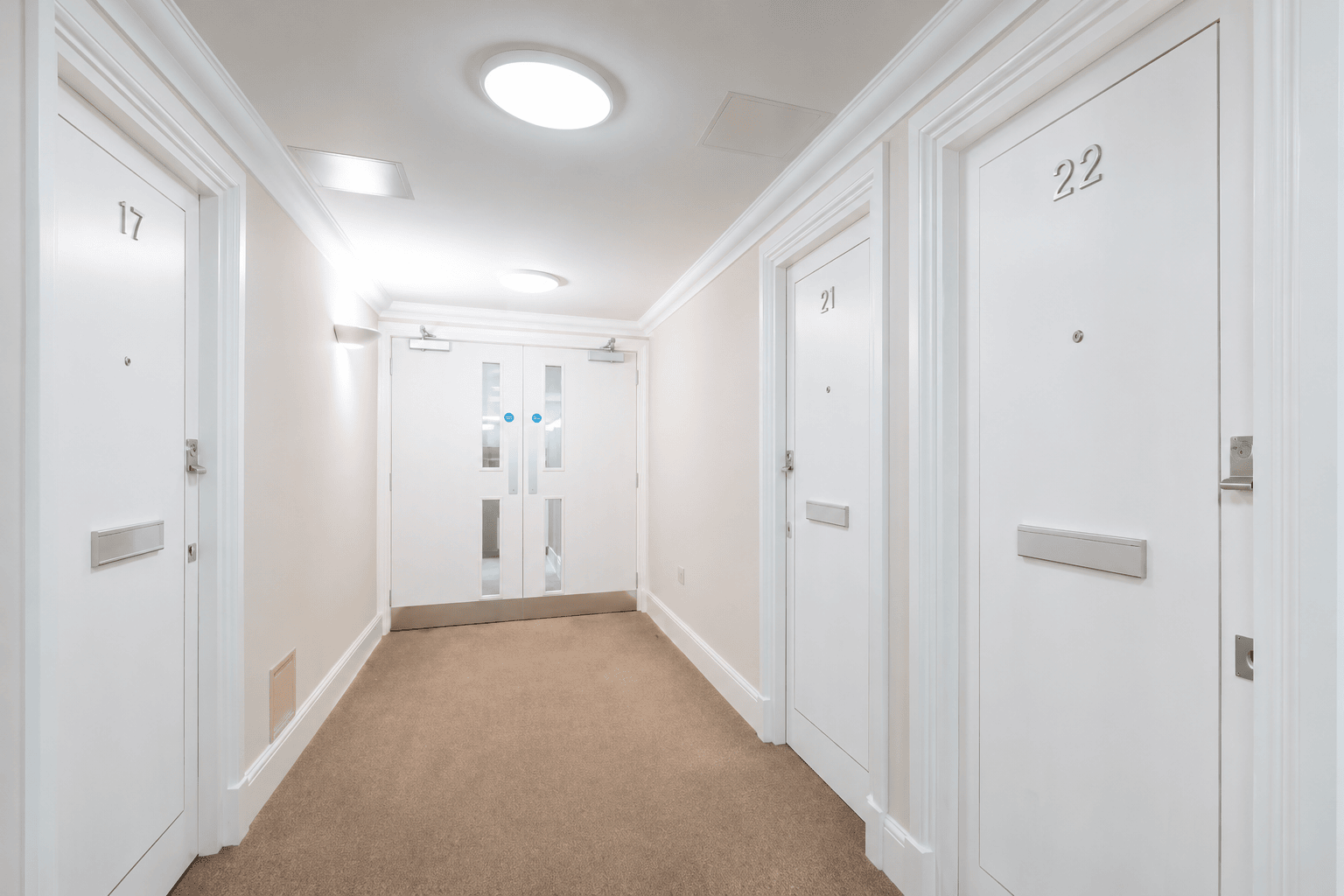
New fire safety laws came into effect on 6th April 2026. These regulations introduce mandatory evacuation planning for residents who