Harnesses and lanyards, whether part of a fall restraint or fall arrest system, are a critical control measure for managing work at height risks under the Work at Height Regulations 2005.
As Riskhop, we often see confusion around inspection and servicing requirements, particularly the differences between fall arrest and fall restraint systems. This can lead to compliance gaps and increased risk, especially when you consider the significant forces and harsh environmental conditions these systems endure.
Structured inspection regimes aren’t just good practice, they’re a legal requirement.
This post sets out what’s required, why it matters, and who’s responsible.
Why Inspections Are Necessary
Regulation 12(3) of the Work at Height Regulations 2005 places a direct legal duty on employers to ensure that equipment exposed to conditions which may cause deterioration is inspected at suitable intervals and following any exceptional circumstances.
Harnesses and lanyards form part of life safety systems. They’re there to prevent falls or to protect users if a fall occurs.
Over time, the materials degrade. This may be due to general wear, but it’s often accelerated by environmental factors such as dust, chemicals, moisture, or heat. Even where damage isn’t immediately visible, the integrity of the fibres can be compromised.
For that reason, regular inspection is essential to ensure the equipment remains safe to use.
Clearing Up the Confusion: Fall Arrest vs Fall Restraint
A common area of misunderstanding is the difference between fall arrest and fall restraint systems.
Fall arrest systems are designed to protect the user during a fall. They typically include energy absorbing components that reduce the forces experienced by the body while bringing the person to a controlled stop.
Fall restraint systems, on the other hand, are designed to prevent the user from reaching a position where a fall could occur in the first place.
While the function differs, both systems usually rely on similar textile components, harnesses and lanyards. Because of this, the inspection requirements are broadly the same.
Pre-Use Checks
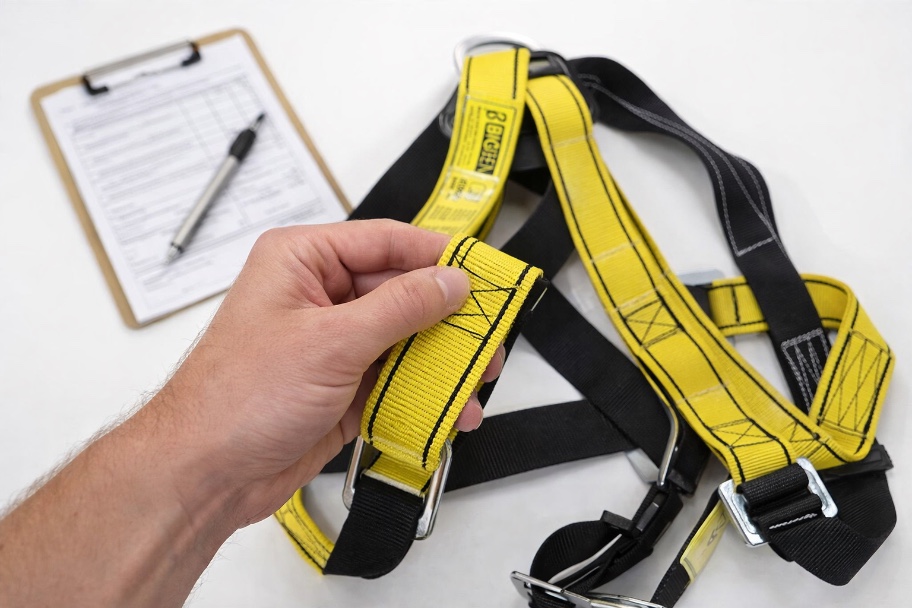
Every harness and lanyard must undergo a pre-use visual inspection as the first check for defects that could make it unsafe. These checks should be completed at the start of each shift, or before use if the equipment has been left unattended.
Users should look for damage such as:
- Cuts or abrasions
- Fraying
- Heat effects
- Contamination
- General wear
They must be trained to carry out these checks, which are typically covered in standard industry training such as IPAF.
While recording pre-use checks isn’t a legal requirement, at Riskhop we recommend including them in daily records to demonstrate consistency.
Any defective equipment must be taken out of use immediately and replaced.
Formal Inspections: Every Six Months
Reliance on pre-use visual checks alone isn’t enough.
HSE guidance INDG367, which covers inspection of fall arrest equipment made from webbing or rope, makes it clear that the same principles apply to all textile based fall protection equipment, including restraint systems.
A detailed inspection must be carried out at least every six months.
These inspections must be both formal and recorded. Records should clearly show:
- What has been inspected
- When
- By whom
- What the outcome was
The person carrying out the inspection must be competent, independent, and impartial.
While this doesn’t legally require a third party, many organisations choose to use one. This helps demonstrate independence and provides additional assurance through specialist expertise.
When More Frequent Checks Are Needed
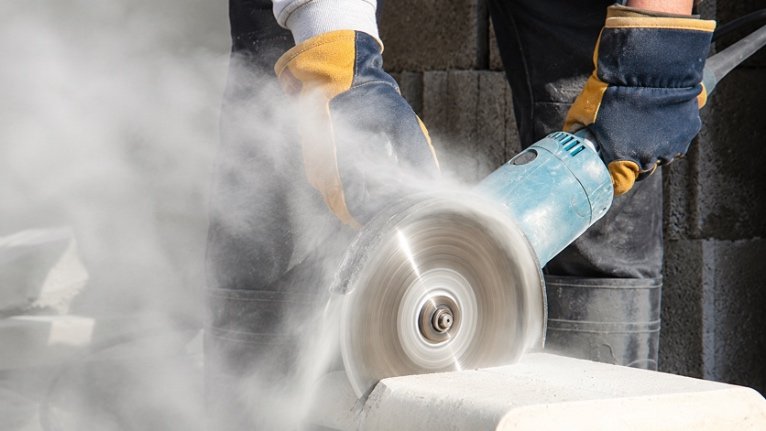
In arduous conditions, such as grit blasting, chemical exposure, or frequent contact with sharp edges, the HSE recommends increasing inspection frequency to every three months.
It’s worth taking a moment to consider whether these conditions apply to your operations.
Final Thought
With multiple inspection requirements to manage, it can be challenging to keep track of what needs to be checked and when.
If you need support reviewing or implementing your inspection regimes, get in touch with Riskhop, we’re here to help.