Who Is a Principal Designer?
The Construction (Design and Management) Regulations 2015 (CDM 2015) introduced the statutory duty holder role of Principal Designer, replacing the


The Construction (Design and Management) Regulations 2015 (CDM 2015) introduced the statutory duty holder role of Principal Designer, replacing the former CDM Co-ordinator role used under previous regulations. This change reflected a shift towards embedding health and safety considerations at an earlier stage of construction projects, particularly during design and pre-construction.
The Principal Designer role carries defined legal responsibilities. Regulations 5, 11 and 12 of CDM 2015 set out when a Principal Designer must be appointed, the scope of their duties, and how those duties apply to both commercial and domestic projects.
The Health and Safety Executive (HSE) define the Principal Designer as the designer with control over the pre-construction phase of a project. The pre-construction phase includes all work carried out before construction begins, such as planning, surveys, design development and early risk assessment.
A designer, as defined by CDM 2015, is any individual or organisation that prepares or modifies a design for a construction project, including temporary works, or arranges for others to do so. The Principal Designer must therefore be a designer, but with additional responsibility for coordinating health and safety during the pre-construction phase.
The role is central to ensuring that foreseeable risks are identified early and, where reasonably practicable, eliminated or reduced through design.
The core duties of the Principal Designer are set out in Regulations 11 and 12 of CDM 2015. In summary, the Principal Designer is required to plan, manage and monitor health and safety arrangements during the pre-construction phase and to coordinate design work so that risks are properly addressed.
These duties extend beyond construction and must take account of the future maintenance, cleaning, use and, where applicable, demolition of the structure and its installations. The Principal Designer must apply something known as the general principles of prevention when considering design risk. The general principles of prevention relate to a defined framework which identifies and implements measures to control risk.
The role of principal designer relies on effective cooperation with other duty holders, particularly the Client, Designers and the Principal Contractor.
The Principal Designer must assist the Client in identifying, obtaining and collating pre-construction information. This is information already in the Client’s possession or information that is reasonably obtainable and relevant to managing health and safety risks, such as ground investigation reports, asbestos surveys and existing services information.
The information must be reviewed to ensure it is suitable, proportionate and relevant for those involved in the design and construction of the project.
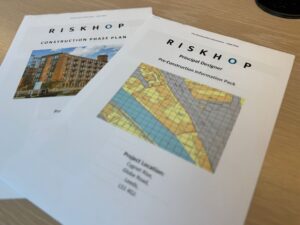
Where multiple designers are involved, the Principal Designer must ensure that relevant pre-construction information is provided and that designers comply with their duties under CDM 2015. This includes ensuring cooperation between designers and that health and safety risks are considered when designs are prepared or modified.
Where the Principal Designer appoints other designers, they must ensure those designers have the appropriate skills, knowledge and experience to carry out their work safely and competently.
The Principal Designer must liaise with the Principal Contractor for the duration of their appointment. This includes providing all relevant pre-construction information to enable the Principal Contractor to prepare a suitable Construction Phase Plan prior to works commencing
A Client must appoint a Principal Designer where more than one contractor is involved, or where it is reasonably foreseeable that more than one contractor will be working on the project. This requirement applies regardless of whether the project is notifiable to the HSE.
Where a Client fails to appoint a Principal Designer, the Client must fulfil the Principal Designer duties set out in Regulations 11 and 12.
The Principal Designer’s duties do not change on domestic projects. The role must still be carried out in accordance with Regulations 11 and 12, with duties applied in proportion to the level of risk involved.
The Principal Designer must assist the Principal Contractor in preparing the Construction Phase Plan by providing all relevant information held, including reviewed and revised pre-construction information and information produced by designers in accordance with their CDM duties.
For projects involving more than one contractor, the Principal Designer has a legal duty to prepare the Health and Safety File. The file must be appropriate to the characteristics of the project and contain information likely to be needed to ensure health and safety during future work, such as maintenance, cleaning, refurbishment or demolition.
The Principal Designer must prepare, review and update the file throughout the project and ensure it is handed to the Client on completion. The file should include a brief description of the work carried out, details of residual hazards, key structural principles, information on hazardous materials, arrangements for dismantling plant or equipment, details of cleaning and maintenance provisions, and the nature and location of significant services. As-built drawings and information relating to safe access should be included where relevant.
The level of detail must be sufficient to allow foreseeable risks to be identified and managed during subsequent work.
The Principal Designer must be appointed in writing by the Client and should be appointed as early as possible to allow health and safety risks to be addressed during the initial design stages
Riskhop specialises in CDM 2015 consultancy and can be appointed as Principal Designer for the duration of your project. As Principal Designer, we ensure that statutory duties are fulfilled and that health and safety risks are managed effectively during the pre-construction phase.
We also support Clients and Designers in understanding and meeting their own CDM responsibilities, providing practical, proportionate advice throughout the project lifecycle.
The Principal Designer is the designer with control over the pre-construction phase and plays a key role in managing health and safety through effective coordination and risk management. Appointment is required where more than one contractor is involved, regardless of project size or notification status, and the role applies equally to commercial and domestic projects.
Head to our CDM 2015 services page for more information as to how Riskhop can aid fulfilment of the principal designer role and other CDM duty holder roles.
Check out our blog post ‘A Guide to CDM 2015‘ for further information on the CDM regulations.
The Construction (Design and Management) Regulations 2015 (CDM 2015) introduced the statutory duty holder role of Principal Designer, replacing the
Completing a fire risk assessment for your premises is a legal requirement. However, with the addition of further fire regulations
Who Is a Competent Person? In the context of health and safety, a “Competent Person” is someone with correct level